
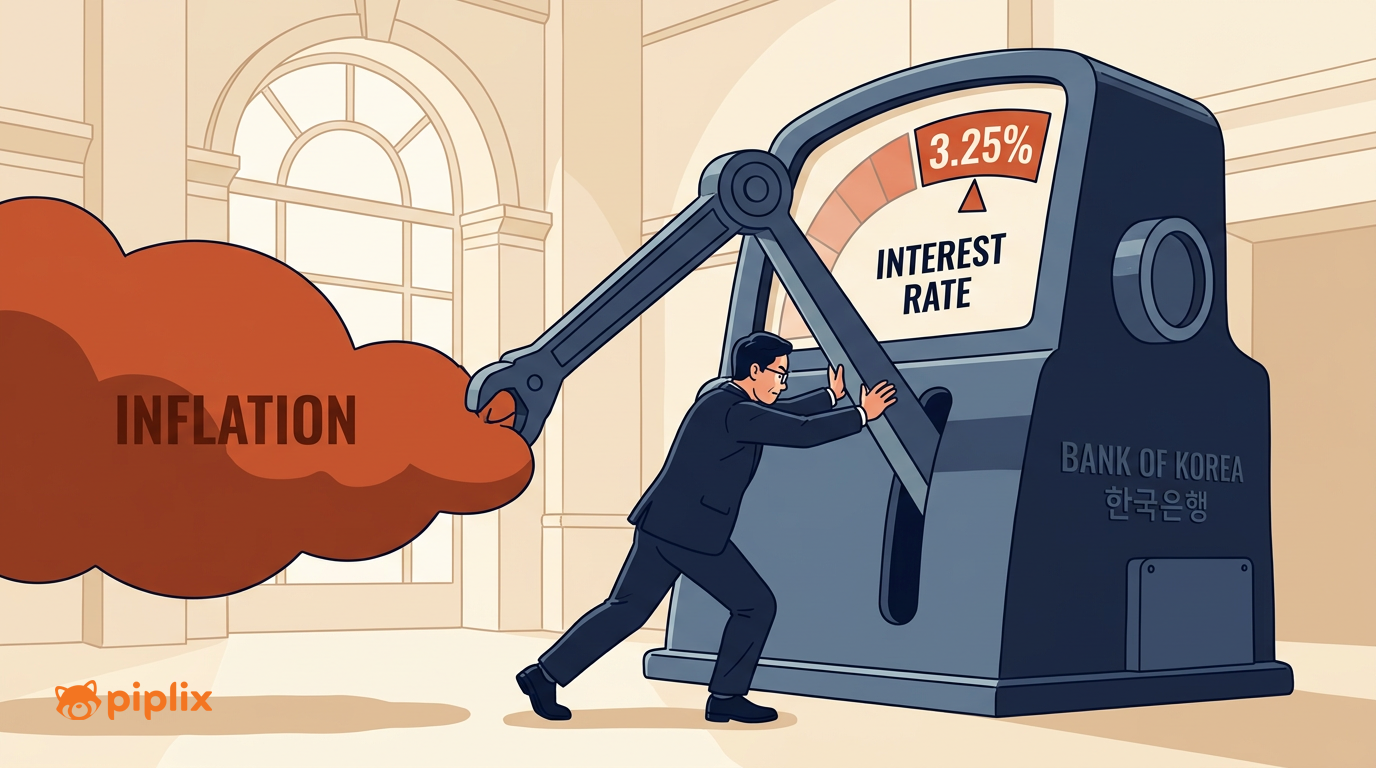

The Bank of Korea raised its benchmark Interest rateThe price of borrowing money, set or influenced by central banks. Differences in expected interest rates are a major driver of currency demand.Read More by 25 basis points from 3.00% to 3.25% on November 26, resuming Monetary TighteningMonetary Tightening refers to actions undertaken by a central bank to reduce the money supply and increase interest rates in order to “tighten financial conditions” to slow down...Read More after a three-month pause. The decision reflects stronger-than-expected economic growth, persistent inflationary pressures and financial stability concerns. The Central BankCentral Bank refers to the public monetary authority responsible for managing a currency system and implementing monetary policy. The term belongs in Level 7 because it helps co...Read More also significantly upgraded its economic growth forecasts, projecting expansion of 3.9% in 2026 and 4.1% in 2027, supported by strong semiconductor exports and artificial intelligence-related DemandHow much buyers want at a given price. Stronger demand can make buyers compete with higher offers.Read More.
The Bank of Korea raised its benchmark interest rate by 25 basis points to 3.25% on November 26, ending a three-month pause in monetary tightening. The decision reflects stronger economic growth, persistent InflationA broad rise in prices that reduces money’s purchasing power. Central banks watch inflation because it affects interest-rate decisions.Read More and financial stability concerns. The central bank also upgraded its growth forecasts to 3.9% for 2026 and 4.1% for 2027, supported by strong semiconductor exports and AI-related demand.
