
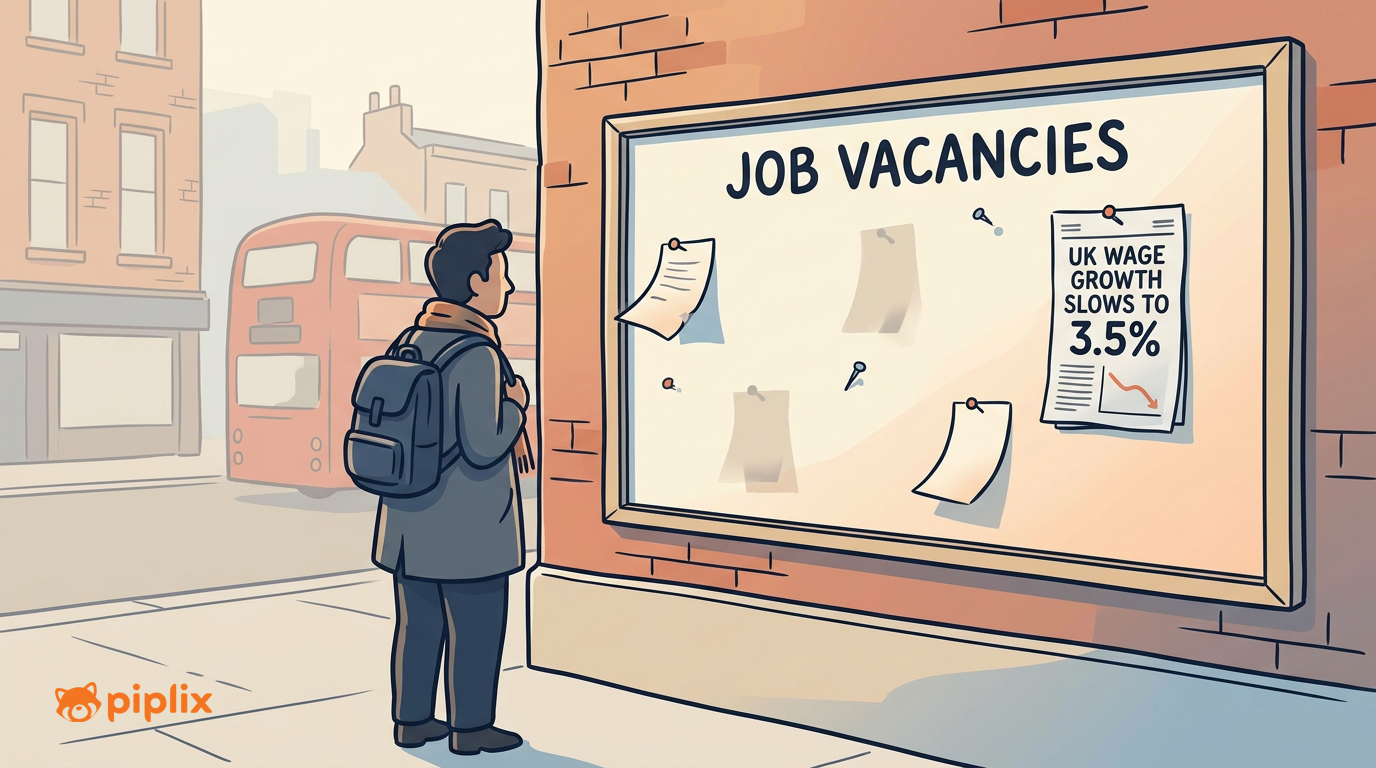

UK regular wage growth, excluding bonuses, slowed to 3.5% year-on-year in the three months to September 2026, down from 3.7% in the previous period. Total pay growth, including bonuses, eased to 3.6% from 3.8%. The Unemployment RateUnemployment Rate refers to the unemployment rate is basically the percentage of the people in the workforce without jobs but is able and willing to work. The term belongs in Le...Read More unexpectedly declined to 4.6% from 4.7%, while the number of vacancies fell by 22,000 over the quarter to 690,000, its lowest level outside the pandemic period since 2014. Separately, provisional HMRC payroll estimates showed employee numbers falling by 34,000 between September and October. The figures present a mixed picture for the Bank of England as it assesses wage-driven InflationA broad rise in prices that reduces money’s purchasing power. Central banks watch inflation because it affects interest-rate decisions.Read More pressures and labour-MarketA place - physical or digital - where buyers and sellers meet and agree on a price. Lix’s simple rule: no buyers and sellers, no market.Read More weakness.
UK wage growth slowed in the three months to September 2026, with regular pay increasing by 3.5% and total pay by 3.6%. Meanwhile, unemployment unexpectedly declined to 4.6%, but vacancies fell to 690,000 and provisional payroll estimates showed a loss of 34,000 employees between September and October. The mixed figures leave the Bank of England balancing easing wage pressures against signs of weakening labour DemandHow much buyers want at a given price. Stronger demand can make buyers compete with higher offers.Read More.
