
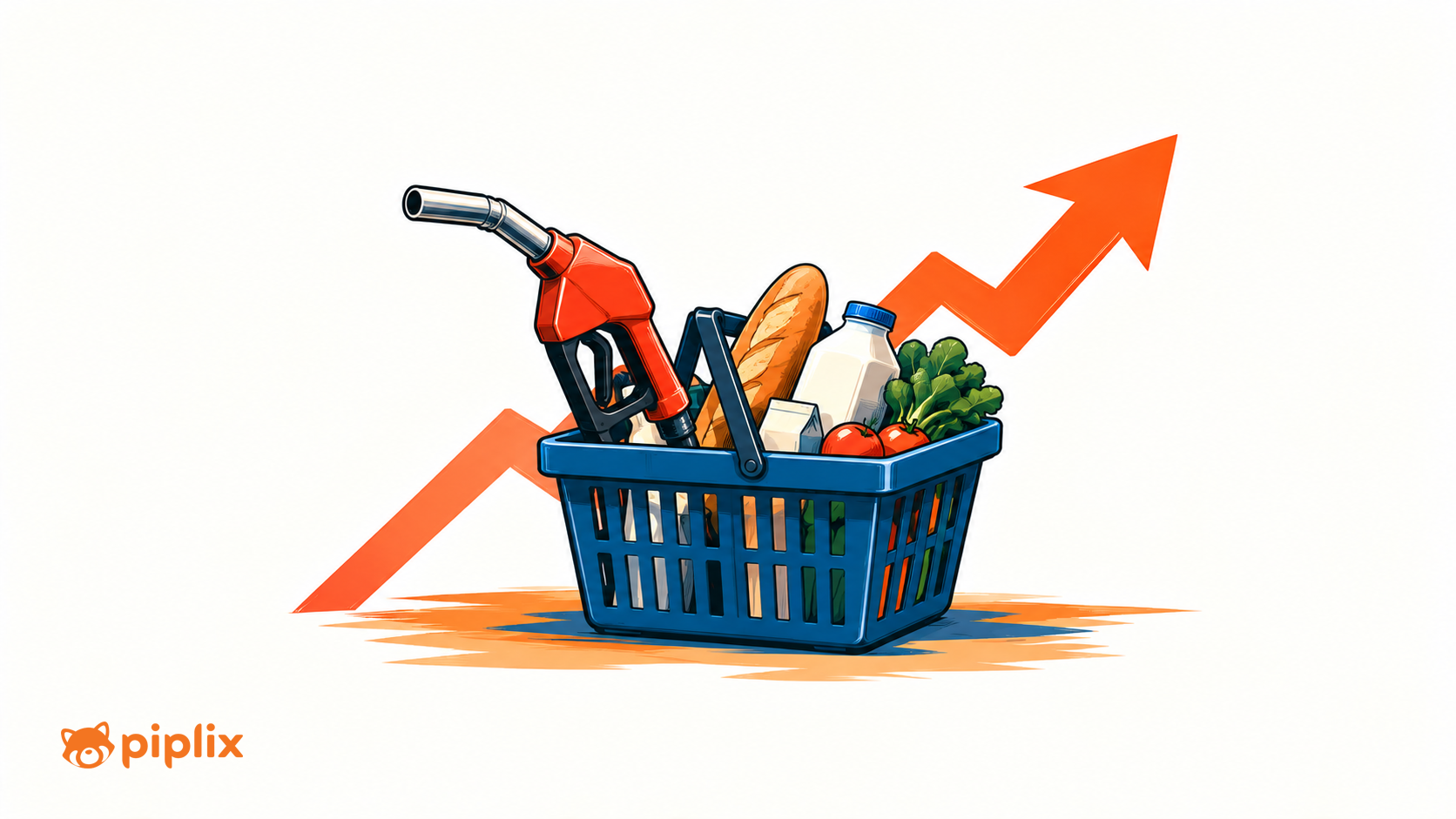

UK annual consumer-PriceThe most recent agreement between a buyer and a seller. It is not a prediction; it is the market’s latest handshake.Read More InflationA broad rise in prices that reduces money’s purchasing power. Central banks watch inflation because it affects interest-rate decisions.Read More increased to 3.5% in September 2026 from 3.1% in August, according to official statistics reported on 21 October. The outcome exceeded the Reuters economists’ consensus of 3.4%, as energy and motor-fuel prices pushed inflation higher. MarketA place—physical or digital—where buyers and sellers meet and agree on a price. Lix’s simple rule: no buyers and sellers, no market.Read More participants assessed implications for the Bank of England’s next rate decision.
UK annual inflation reportedly accelerated to 3.5% in September, driven partly by rising fuel and energy costs. Higher transport expenses added pressure to household budgets and raised concerns about persistent price increases. The figures could influence Bank of England Interest rateThe price of borrowing money, set or influenced by central banks. Differences in expected interest rates are a major driver of currency demand.Read More expectations, while investors monitor the potential impact on SterlingSterling is a common name for the British pound, whose currency code is GBP. In market commentary, 'sterling' and 'the pound' generally refer to the same cur...Read More, government bond yields and consumer spending.
