
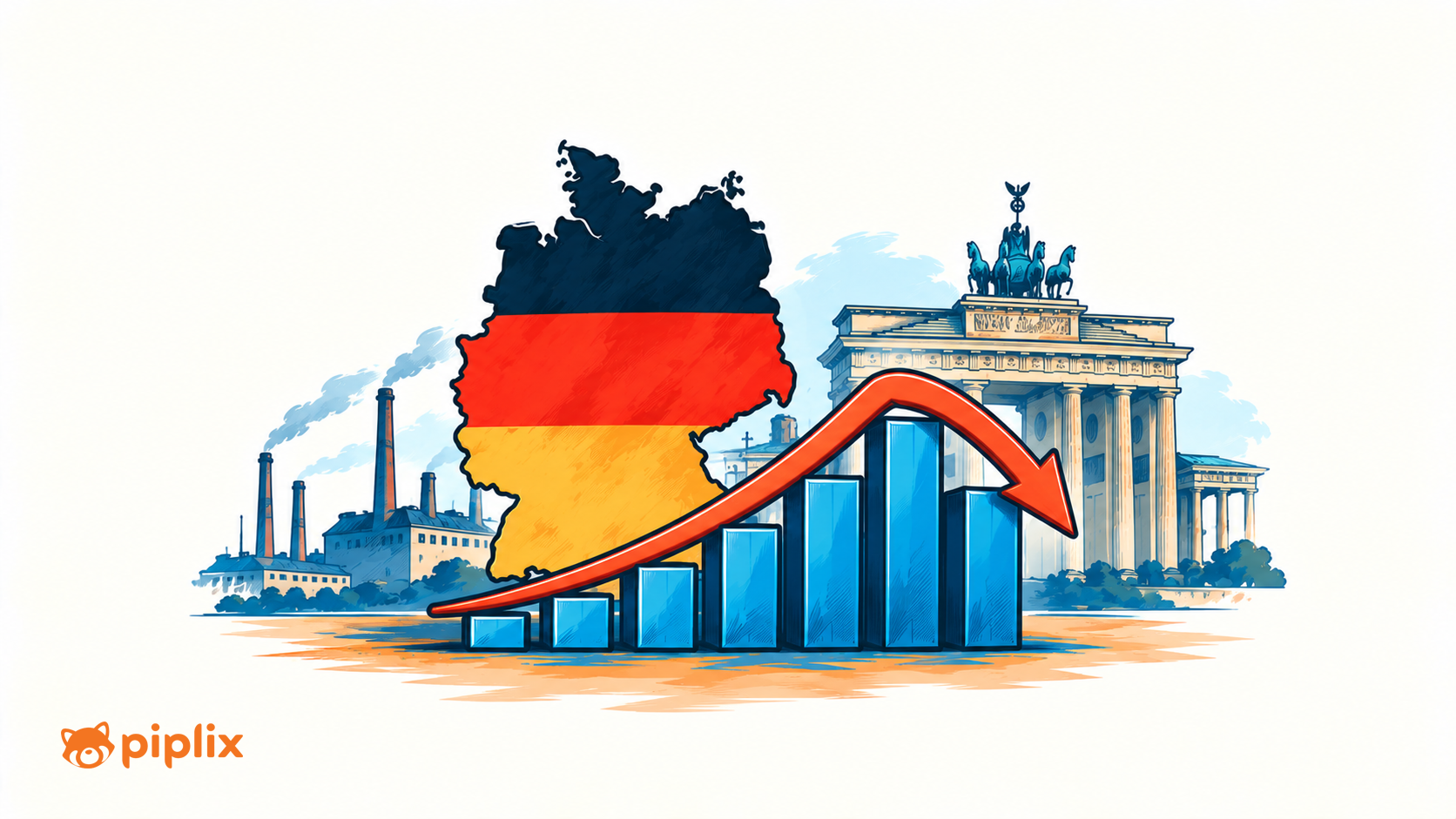

Germany’s flash composite PMI eased to 52.8 in October from 53.8 in September, remaining in expansion territory. Manufacturing PMI advanced to 54.2, while services PMI eased to 51.7 from 52.9. The release suggests weaker overall growth even as factory activity remained relatively resilient.
Germany's private-sector growth reportedly slowed in October as the Composite Purchasing Managers' Index (PMI) fell to 52.8. Although the reading remains above the 50-point threshold indicating expansion, it suggests weaker business momentum. Investors are monitoring manufacturing activity, services DemandHow much buyers want at a given price. Stronger demand can make buyers compete with higher offers.Read More and European Central BankCentral Bank refers to the public monetary authority responsible for managing a currency system and implementing monetary policy. The term belongs in Level 7 because it helps co...Read More Interest rateThe price of borrowing money, set or influenced by central banks. Differences in expected interest rates are a major driver of currency demand.Read More expectations for their potential impact on Germany's economic outlook and the euro.
