
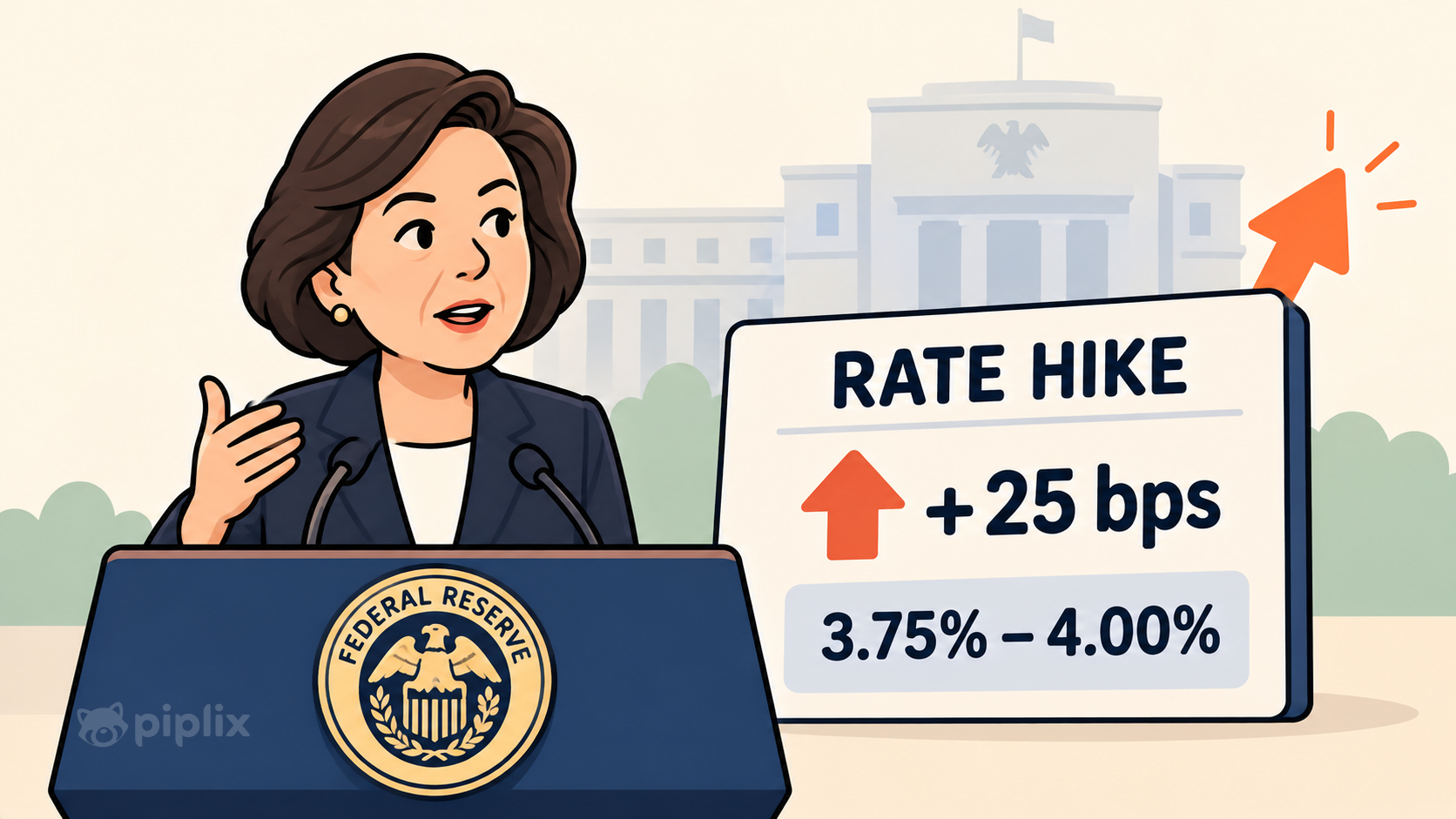

Boston Fed President Susan Collins said she supported last week's 25-basis-point rate increase because she now sees a greater chance that InflationA broad rise in prices that reduces money’s purchasing power. Central banks watch inflation because it affects interest-rate decisions.Read More remains notably above 2%. She said a stronger labor MarketA place - physical or digital - where buyers and sellers meet and agree on a price. Lix’s simple rule: no buyers and sellers, no market.Read More allows policy to focus on restoring PriceThe most recent agreement between a buyer and a seller. It is not a prediction; it is the market’s latest handshake.Read More stability and that a somewhat more restrictive federal-funds rate should help return inflation durably to target. Collins, who is not an FOMC voter this year, did not say whether she favors another increase. The Fed's target RangeA market state where price moves between boundaries without a clear sequence of higher highs or lower lows. Waiting is a valid read here.Read More is 3.75%-4.00%.
| Item | Value | Why it matters |
|---|---|---|
| Fed target range | 3.75%–4.00% | Sets the current U.S. policy-rate level after the September increase. |
| September rate move | +25 basis points | Shows the latest Fed action Collins supported. |
| Fed inflation target | 2.0% | Explains the benchmark behind her concern that inflation could remain too high. |
| Collins’ 2026 voting status | Non-voter | Her remarks matter, but she does not vote on FOMC decisions this year. |
