

Tiff Macklem says new U.S. tariffs could halve Canada's fourth-quarter growth to below 1% while high OilOil refers to a globally traded energy commodity whose price is shaped by supply, demand, inventories, geopolitics, and economic activity. The term belongs in Level 7 because it...Read More keeps InflationInflation refers to a sustained rise in the general price level that reduces the purchasing power of money. The term belongs in Level 7 because it helps connect macro conditions...Read More risks elevated.
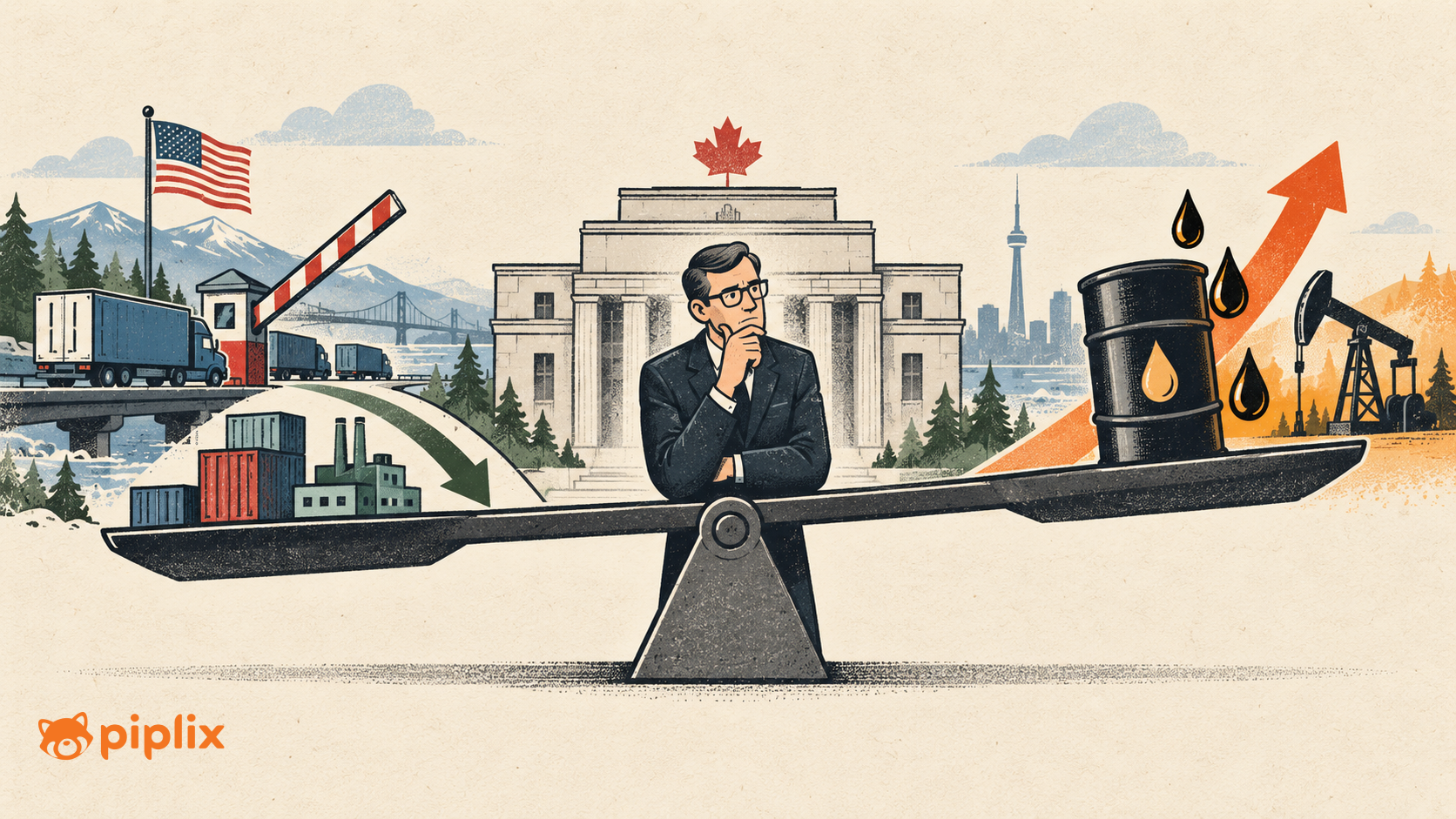
New U.S. tariffs could roughly halve Canada's fourth-quarter growth to below 1% if they remain in place, Bank of Canada Governor Tiff Macklem said. The warning follows 3.3% annualized growth in the second quarter. Macklem said trade uncertainty may delay investment and hiring, while oil near $100 a barrel could push inflation above its recent 3% rate. The opposing growth and inflation pressures leave the Bank assessing whether its current policy rate still balances the outlook.
| Item | Value | Why it matters |
|---|---|---|
| F1 | CONFIRMED_FACT | Bank of Canada Governor Tiff Macklem said that if the new U.S. tariffs remain in place, Canada's fourth-quarter growth could be roughly halved to below 1%. |
| F2 | CONFIRMED_FACT | Macklem said the affected products represent about 5% of Canada's goods exports to the United States and that federal support programmes should mitigate part of the direct damage. |
| F3 | CONFIRMED_FACT | Canada's economy expanded at a 3.3% annualized rate in the second quarter of 2026, Reuters reported. |
| F4 | CONFIRMED_FACT | Macklem said CPI inflation has remained around 3% in recent months and could edge higher if oil stays near $100 per barrel. |
| F5 | CONFIRMED_FACT | The Bank has not seen substantial evidence that higher fuel costs are spreading to other goods and services, but Macklem said the risk of broader and more persistent inflation has increased. |
| F6 | CONFIRMED_FACT | Macklem said the Bank does not want to raise rates and restrain growth if inflation pressures remain contained, but also does not want to respond too slowly if those pressures become persistent. |
| F7 | PIPLIX_INFERENCE | The combination of tariff-driven demand weakness and energy-driven inflation reduces the clarity of the Bank's next policy move because the two shocks pull growth and rates in opposite directions. |
| F8 | CONDITIONAL_SCENARIO | Persistent tariffs with contained inflation could strengthen the case for easier policy, while broader energy-price pass-through or rising inflation expectations could increase pressure for a rate rise despite slower growth. |
